LOCTITE Threadlocker: Uses, Types, Selection & Application Guide
Learn about Loctite threadlocker uses, including how threadlocking adhesives help secure bolts and threaded fasteners. Explore LOCTITE 222, 243 and 262, their applications, strength levels and how to choose and apply the right product.
LOCTITE Threadlocker: Uses, Types, Selection & Application Guide
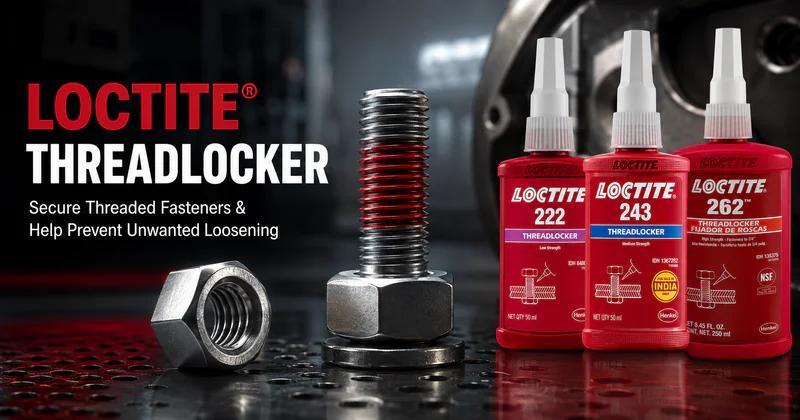
Threaded fasteners such as bolts, nuts and screws can loosen due to vibration, movement and operating conditions. LOCTITE Threadlocker is a threadlocking adhesive applied to threaded fasteners to help secure assemblies and prevent unwanted loosening.
What Is LOCTITE Threadlocker?
LOCTITE Threadlocker is applied directly to the threads of bolts, screws and other compatible fasteners before assembly. It helps secure the mating threads and is commonly used in automotive, machinery, manufacturing, maintenance and industrial applications.
Types of LOCTITE Threadlocker
Different LOCTITE grades are available for different fastening requirements.
LOCTITE 222– A low-strength threadlocker suitable for applications where future disassembly may be required.
LOCTITE 243 – A medium-strength threadlocker commonly used for general assembly and maintenance applications.
LOCTITE 262 – A high-strength threadlocker designed for applications requiring greater resistance to loosening.
Always check the relevant technical data sheet before selecting a product.
How to Choose the Right LOCTITE Threadlocker
Select the appropriate grade based on:
- Required bonding strength
- Fastener size
- Whether future removal is required
- Vibration and operating conditions
- Temperature and environmental exposure
- Specific assembly requirements
A removable assembly may require a different grade from a permanent or high-strength fastening application.
How to Apply LOCTITE Threadlocker
- Clean the threads and remove dirt, grease or other contaminants where required.
- Apply the appropriate amount of threadlocker to the threaded area.
- Assemble and tighten the components according to the applicable procedure.
- Allow curing according to the manufacturer's instructions before service.